Traditional German Pumpernickel Bread Recipe: Old-Style Rye Bread
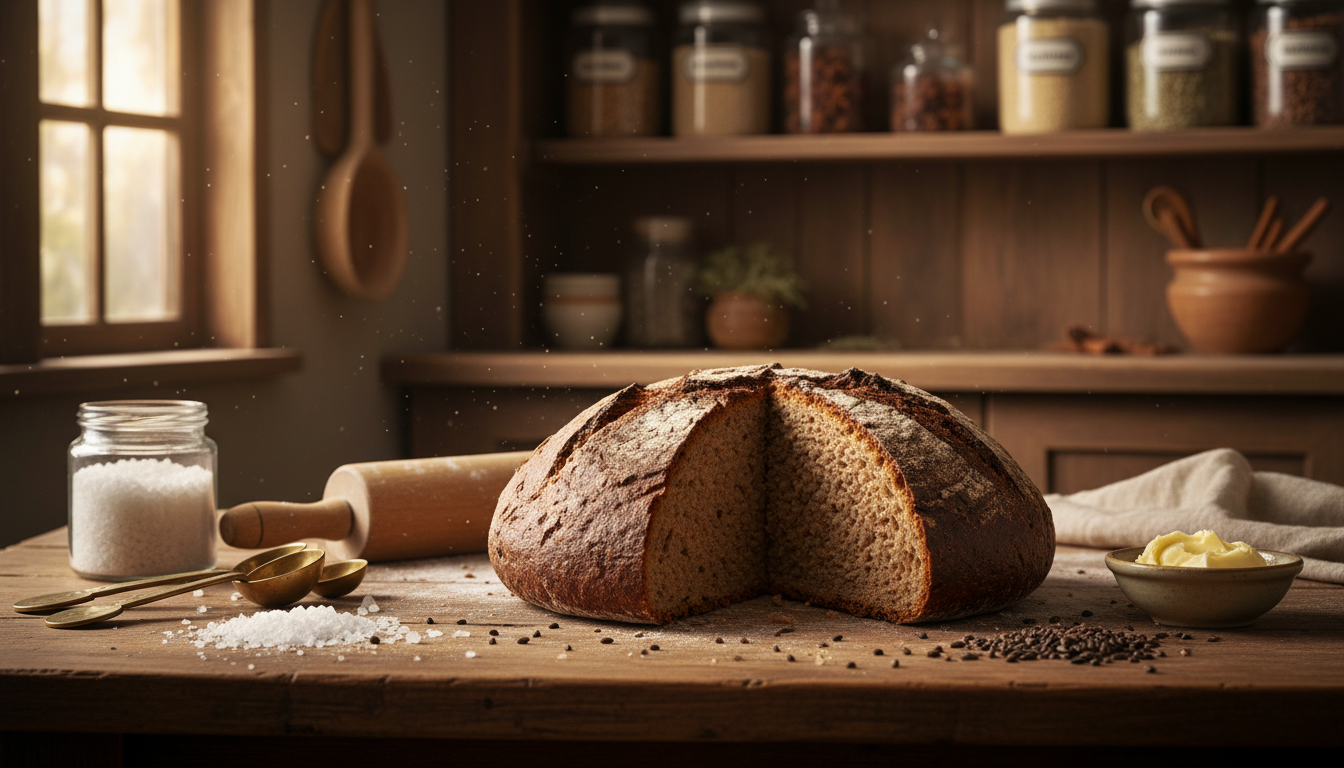
There is something deeply comforting about the aroma of dark, hearty grains filling your home. I remember watching my grandmother work with heavy dough, her hands moving with a rhythm that felt like a lost art. Today, I want to share my own traditional german pumpernickel bread recipe to help you recreate that magic.
Thank you for reading this post, don't forget to subscribe!Many modern versions rely on shortcuts like coffee or molasses to achieve that iconic deep color. However, this authentic Westphalian method focuses on patience and the natural transformation of wholesome ingredients. By skipping those additives, you unlock a complex, earthy flavor that defines true, old-style rye baking.
I am thrilled to guide you through this process. Following this traditional german pumpernickel bread recipe will reward you with a dense, nutrient-rich loaf that honors history. Let us begin this journey of slow, intentional baking together.
Table of Contents
The History and Essence of Authentic Pumpernickel
When I think of true German baking, my mind immediately drifts to the dark, dense loaves of Westphalia. This bread is not just a food item; it is a cultural icon that has sustained generations for over five centuries. Mastering a traditional german pumpernickel bread recipe requires an appreciation for this long, storied past.
Understanding the Westphalian Tradition
The Westphalia region of Germany is the true birthplace of this unique bread. For hundreds of years, local bakers have relied on slow, low-temperature baking methods to transform simple rye grains into something extraordinary. This process is a testament to the patience and dedication of the artisans who came before us.
The bread was originally baked in large, communal ovens that stayed warm for days. This allowed the rye to undergo a long, gentle transformation that created its signature deep color and complex, earthy sweetness. Today, we honor this heritage by replicating those specific conditions in our own kitchens.
Why Pumpernickel is Different from Standard Rye
Many people confuse pumpernickel with common rye breads found in grocery stores. However, the difference is quite significant. Most commercial rye breads are actually wheat-based loaves with a small amount of rye flour added for flavor.
In contrast, an authentic traditional german pumpernickel bread recipe uses 100% rye. This means the loaf is incredibly dense, moist, and packed with the natural nutrients of the whole grain. Because it lacks the gluten structure of wheat, the texture is distinctively heavy and satisfying, making it a nutritional powerhouse that keeps you full for hours.
Essential Ingredients for Your Traditional German Pumpernickel Bread Recipe
Mastering a traditional German pumpernickel bread recipe requires nothing more than patience and high-quality staples. You do not need complex additives to achieve the deep, earthy flavor of a professional loaf. The magic happens because rye contains 7% natural fruit sugar, which caramelizes during the long bake to provide a unique, sweet aroma.
Sourcing High-Quality Rye Berries and Meal
The foundation of your bread is the grain itself. I always recommend sourcing freshly milled coarse rye meal to ensure the best texture and nutritional profile. When you use high-quality rye, the natural oils remain intact, which significantly improves the final taste of your loaf.
The Role of Sourdough in Authentic Flavor
Authentic pumpernickel relies on a robust sourdough starter to develop its signature tang. This fermentation process is not just about leavening; it is about creating a complex, acidic environment that breaks down the tough rye starches. By incorporating a mature starter, you ensure that your bread develops that distinctive, deep flavor that defines the classic style.
Water and Salt: The Simple Foundations
Water and salt act as the essential foundations for a truly nutritious and satisfying bread. While these ingredients seem basic, they play a critical role in controlling the fermentation speed and strengthening the dough structure. Using filtered water and high-quality sea salt will help you maintain the purity of your traditional German pumpernickel bread recipe, allowing the natural character of the rye to shine through without interference.
Necessary Equipment for Long-Bake Success
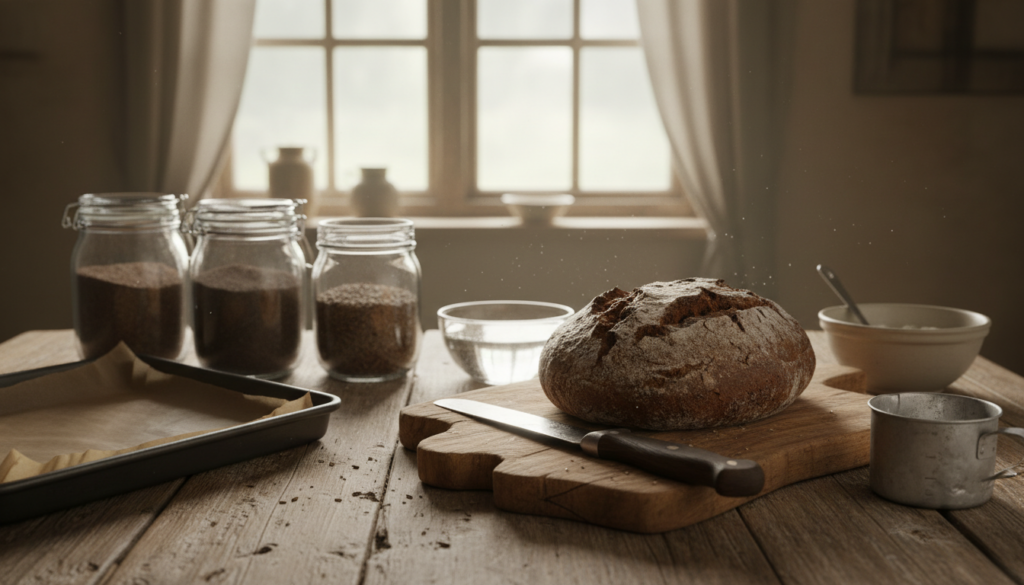
When you embark on a traditional German pumpernickel bread recipe, your equipment choices determine your final success. Because this bread requires such a long baking time, having the right tools is vital for achieving that signature dense, moist crumb. I always recommend investing in high-quality gear to ensure your efforts yield professional results.
Selecting the Right Bread Tin
The most critical piece of equipment is a heavy-duty Pullman pan or a sturdy loaf tin. These pans are designed to be tightly sealed, which is essential for trapping steam inside during the long, low-temperature bake. Without a proper seal, the moisture will escape, leading to a dry and crumbly loaf rather than the authentic texture you desire.
I suggest using a pan with a sliding lid to maintain consistent pressure. This helps the bread develop its characteristic dark color and deep, earthy flavor profile. A well-constructed tin will distribute heat evenly, preventing hot spots that could ruin your bake.
Temperature Control Tools for the Oven
Precision is the hallmark of a great baker, especially when working with rye. I rely heavily on a digital scale to measure my ingredients, as even a small deviation can affect the hydration of the dough. Accuracy is the foundation of any traditional German pumpernickel bread recipe.
Additionally, an oven thermometer is an absolute necessity. Since you will be baking at low temperatures for many hours, you must ensure your oven maintains a steady heat without fluctuating. Using a reliable probe thermometer will also help you monitor the internal temperature of the loaf to ensure it is fully cooked through.
| Equipment Item | Primary Purpose | Why It Matters |
|---|---|---|
| Pullman Pan | Steam Retention | Ensures moist, dense crumb |
| Digital Scale | Ingredient Accuracy | Maintains perfect dough ratios |
| Oven Thermometer | Heat Consistency | Prevents uneven baking cycles |
| Probe Thermometer | Internal Monitoring | Confirms readiness of the loaf |
Preparing the Sourdough Starter and Soaker
I find that the most critical phase of this traditional German pumpernickel bread recipe happens in the mixing bowl days before baking. Success depends on your ability to manage the hydration of your grains and the activity of your wild yeast. By following a structured timeline, you ensure the final loaf achieves that signature dense, dark crumb.
Activating Your Rye Starter
Your rye starter acts as the heart of the bread. I recommend feeding your starter with fresh rye flour and warm water at least twelve hours before you plan to mix the main dough. Consistency is key; you want a bubbly, active culture that smells slightly tangy and sweet.
If your starter feels sluggish, keep it in a warm spot in your kitchen. A healthy, active starter is the foundation of a successful traditional German pumpernickel bread recipe. Once it doubles in size, it is ready to provide the necessary lift and flavor complexity.
Creating the Cracked Rye Soaker
The soaker is essential for softening the tough, cracked rye grains. I combine the cracked rye with boiling water to jumpstart the hydration process. This step prevents the grains from absorbing moisture from the dough later, which would otherwise lead to a dry loaf.
Let this mixture sit covered at room temperature for at least 24 hours. This long soak allows the enzymes to break down the starches, creating a naturally sweet and moist texture. You will notice the grains swell significantly as they absorb the liquid.
Timing the Fermentation Process
Patience is your best tool when working with rye. The fermentation process should be slow and steady to develop the deep, earthy notes characteristic of this bread. I monitor the temperature closely, as rye ferments best in a stable, room-temperature environment.
| Stage | Duration | Goal |
|---|---|---|
| Starter Activation | 12 Hours | Peak Activity |
| Grain Soaking | 24 Hours | Full Hydration |
| Final Fermentation | 8-12 Hours | Flavor Development |
Following this schedule ensures that your traditional German pumpernickel bread recipe yields a professional result. Do not rush these stages, as the slow breakdown of sugars is what gives the bread its dark, rich color. Proper timing is the secret to mastering this classic craft.
Mixing and Kneading the Dense Rye Dough
Working with rye flour presents a unique challenge due to its high stickiness and density. Unlike wheat-based doughs that rely on gluten development, this traditional german pumpernickel bread recipe focuses on creating a heavy, moist structure. I find that the process is more about folding and packing than traditional kneading.
Combining the Components
To begin, combine your active rye starter with the prepared soaker in a large mixing bowl. I recommend using a sturdy wooden spoon or a heavy-duty stand mixer equipped with a paddle attachment. Patience is essential here, as you want to ensure every bit of the rye meal is fully hydrated by the starter.
If you are mixing by hand, do not be alarmed by the thick, porridge-like consistency. Gradually fold in the remaining flour until you achieve a uniform, dark mass. This stage is crucial for the final texture of your loaf.
Managing the Sticky Texture of Rye
Rye dough is notoriously sticky because it lacks the elastic gluten network found in white bread. To manage this, I always keep a small bowl of water nearby to dampen my hands or my bench scraper. Damp tools prevent the dough from clinging to your fingers, making it much easier to handle.
Avoid adding excessive extra flour to combat the stickiness, as this can lead to a dry, crumbly loaf. Instead, embrace the moisture, as it is a hallmark of a high-quality traditional german pumpernickel bread recipe. A light touch and consistent movement will help you manage the dough effectively.
Preparing the Tin for the Long Bake
Once your dough is mixed, you must pack it into your prepared bread tin with great care. I use the back of a wet spoon to press the dough firmly into the corners of the pan. Removing air pockets is vital to ensure the bread bakes evenly during the long, low-temperature process.
Smooth the top of the loaf with a wet spatula to create a professional finish. The dough should fill the tin about three-quarters of the way to allow for a slight rise. Refer to the table below to choose the best mixing approach for your needs.
| Method | Effort Level | Best For | Result |
|---|---|---|---|
| Stand Mixer | Low | Large batches | Consistent texture |
| Hand Mixing | High | Traditionalists | Better dough feel |
| Wooden Spoon | Medium | Beginners | Controlled hydration |
The Art of the Long, Low-Temperature Bake
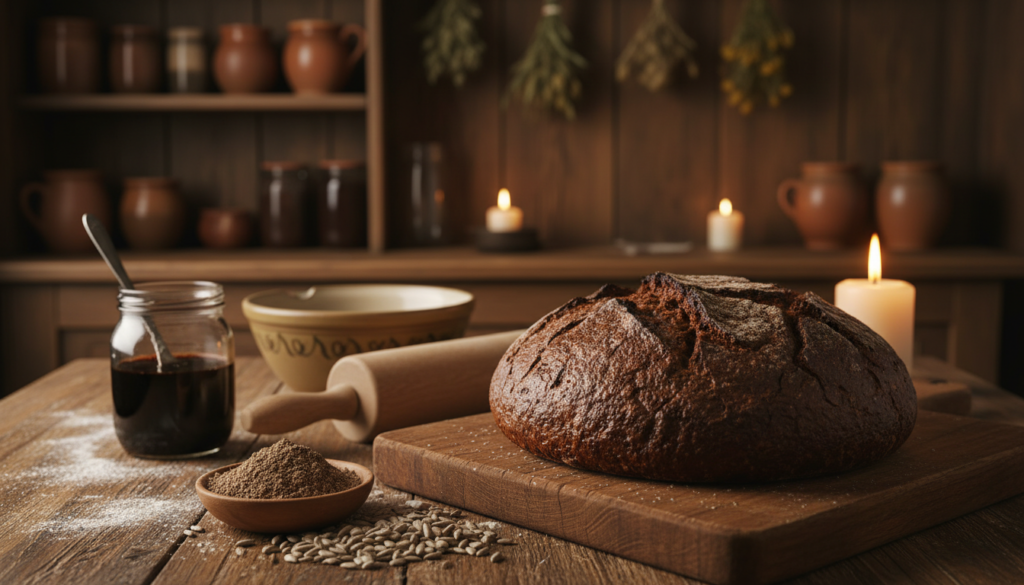
Mastering the low-temperature bake is the most critical step in my traditional German pumpernickel bread recipe. This extended process triggers the Maillard reaction, which is responsible for the bread’s iconic dark color and deep, caramelized sweetness. By keeping the heat low and the time long, you allow the starches to break down into sugars, creating that signature flavor profile.
Setting the Oven for Steam and Heat
To achieve the best results, you must ensure your bread tin is tightly sealed. I recommend using a heavy-duty lid or multiple layers of foil to lock in moisture. This prevents the loaf from drying out during the long hours in the oven, ensuring the crumb remains perfectly moist and dense.
Set your oven to a low temperature, typically around 225°F to 250°F. Maintaining this steady, gentle heat is essential for the slow transformation of the rye grains. If your oven has a tendency to fluctuate, consider using an oven thermometer to keep the environment stable.
Monitoring the Internal Temperature
Because this bread bakes for such a long duration, you cannot rely on visual cues alone. I always use a digital probe thermometer to check the center of the loaf. You are looking for an internal temperature of at least 200°F to ensure the starches have fully gelatinized.
Do not be tempted to pull the bread out too early. A traditional German pumpernickel bread recipe requires patience, often needing 12 to 16 hours of baking time. Consistent monitoring ensures that you reach the ideal texture without overcooking the exterior.
Preventing the Crust from Burning
Even at low temperatures, the edges of the tin can become quite hot over an extended period. I suggest placing your bread tin on a middle rack to allow for even air circulation. If you notice the top edges darkening too quickly, you can tent a piece of foil over the top of the tin.
This simple adjustment protects the crust while allowing the center to finish baking thoroughly. By managing the heat carefully, you ensure that your traditional German pumpernickel bread recipe yields a loaf with a rich, dark color and a tender, flavorful crumb every single time.
Cooling and Maturing for Optimal Flavor
Mastering this traditional german pumpernickel bread recipe involves more than just baking. Once the timer dings, you must resist the urge to slice into your loaf right away. Allowing the bread to rest is a critical step that transforms a hot, dense mass into a complex, flavorful masterpiece.
The Importance of the Resting Period
When you pull the tin from the oven, the internal moisture is still unevenly distributed. If you cut it too soon, the crumb will likely feel gummy or sticky. I always recommend letting the loaf sit in its tin for at least an hour before removing it.
After removing it from the tin, wrap the loaf in a clean kitchen towel and let it rest for at least 24 hours. This resting period allows the moisture to redistribute throughout the rye grains. This process creates that signature firm, sliceable texture that defines a true traditional german pumpernickel bread recipe.
How to Store Pumpernickel for Longevity
Proper storage is the secret to enjoying your hard work for weeks. Because this bread is so dense, it stays fresh much longer than standard wheat loaves. I suggest keeping it in a cool, dry place wrapped in parchment paper or a linen bag.
If you do not plan to finish the loaf within a week, freezing is your best option. Slice the bread before freezing so you can pull out individual portions as needed. This method preserves the integrity of the crumb and prevents the bread from drying out.
| Storage Method | Ideal Duration | Best For |
|---|---|---|
| Countertop | 3-5 Days | Immediate consumption |
| Refrigerator | 1-2 Weeks | Extended freshness |
| Freezer | Up to 3 Months | Long-term storage |
Troubleshooting Common Pumpernickel Baking Challenges
Mastering a traditional German pumpernickel bread recipe is a rewarding journey, though you may encounter minor setbacks along the way. Even experienced bakers occasionally face issues with texture or crust development. Fortunately, most of these problems stem from simple variables like moisture levels or oven calibration.
Addressing Dense or Gummy Crumb
If your loaf feels overly gummy or dense, the culprit is often excess moisture or an incomplete fermentation process. Rye flour is highly absorbent, so ensure your soaker has fully hydrated the grains before mixing. Patience is your best tool when working with this dense dough.
“The secret to a perfect rye loaf lies in the balance of time and temperature, allowing the natural enzymes to break down the starches properly.”
To improve your results, consider these adjustments:
- Check that your sourdough starter is active and bubbly before use.
- Ensure the internal temperature reaches at least 200°F (93°C) to set the crumb.
- Allow the bread to rest for at least 24 hours before slicing to let moisture redistribute.
Fixing Issues with Crust Hardness
A crust that is too hard or thick often results from a lack of steam during the initial baking phase. Using a water pan in the oven helps maintain a humid environment, which keeps the exterior supple while the interior bakes. If the crust remains tough, try wrapping the loaf in a damp cloth immediately after it leaves the oven.
Adjusting for Different Oven Types
Every oven behaves differently, which can impact your traditional German pumpernickel bread recipe. Convection ovens often bake faster and can dry out the loaf, so you may need to lower the temperature by 25°F. If you use a standard conventional oven, ensure you place your tin in the center to avoid uneven heat distribution. Always use an external thermometer to verify your oven’s true temperature, as built-in dials are frequently inaccurate.
Conclusion
Baking your own loaf is a rewarding journey that connects you to centuries of German culinary tradition. By following this traditional german pumpernickel bread recipe, you have learned how to master the long fermentation and low-temperature baking techniques required for success.
I hope you enjoy the rich, earthy flavors of your homemade loaf. This dense, nutritious bread offers a unique profile that pairs perfectly with sharp cheeses or smoked meats. It represents a slow, deliberate approach to food that stands in contrast to modern convenience.
You should continue to experiment with this timeless, nutritious bread in your own kitchen. Adjusting the hydration or the rye meal coarseness allows you to customize the texture to your personal preference. Every batch you bake refines your skills and deepens your appreciation for the craft.
I invite you to share your results with friends and family. Bringing a fresh, dark loaf to the table creates a memorable experience for everyone involved. Your dedication to this traditional german pumpernickel bread recipe keeps a beautiful piece of history alive for future generations to savor.