Corn Harcha: My Mother’s Recipe, a Taste of My Childhood in Ouarzazate
A Recipe, but Above All, a Story
Some recipes are made simply to eat. Others are made to remember.
Thank you for reading this post, don't forget to subscribe!For me, Corn Harcha belongs to the second category.
Whenever I make it today, I don’t just see corn semolina, wheat semolina and olive oil. I see Ouarzazate, our family home, my sisters, my mother’s little kitchen, and the warm Harcha waiting for us when we came home from school.
This is my mother’s Harcha recipe, the recipe of Saida Errabbouhi.
And every time I taste it again, a little piece of my childhood comes back with it.
Table of Contents
My Mother’s Corn Harcha Recipe
Ingredients
- 2 large glasses of corn semolina
- 2 large glasses of wheat semolina
- 1/2 glass of olive oil
- 1 generously filled teaspoon of Himalayan salt
- 1 tablespoon of baker’s yeast or homemade sourdough starter
- Lukewarm water
- White sesame seeds for a crunchy touch
- A little oil for shaping
- A little wheat flour for flattening the dough
Preparing the Harcha
- In a large bowl, combine all the dry ingredients: the corn semolina, wheat semolina, Himalayan salt and baker’s yeast, or homemade sourdough starter.
- Add half a glass of olive oil and mix thoroughly.
- Gradually pour in the lukewarm water while mixing until you obtain a firm, even dough.
- Leave the dough to rest for about 10 minutes.
- Add the white sesame seeds. They give the Harcha that little crunchy touch I love so much.
- Let the dough rest again for a short while, then shape it into balls.
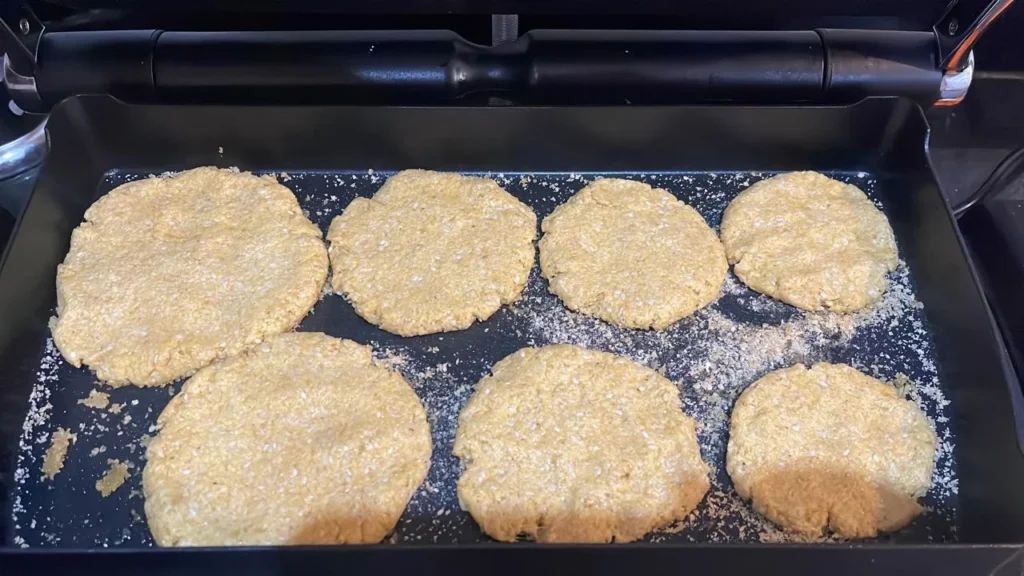
- Put a little oil on your hands and flatten each ball on a lightly floured surface.
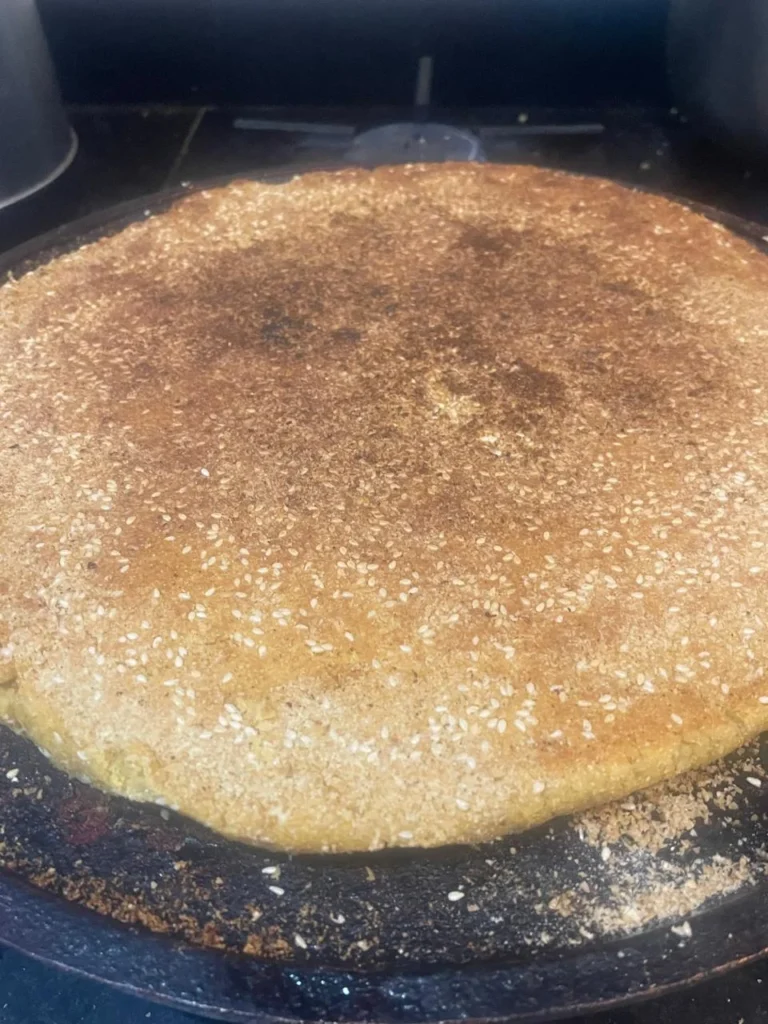
For an extra indulgent version, you can even add a little Nutella in the centre.
Ouarzazate, 1990: Where My Story with Harcha Began
Ouarzazate, 1990.
I am still a little girl.
In our home, my mother prepares Harcha with her gentle hands, using a very modest gas oven called ITIMAT.
My mother was very young at the time. She was beautiful. She still is.
My beautiful mother, Saida Errabbouhi.
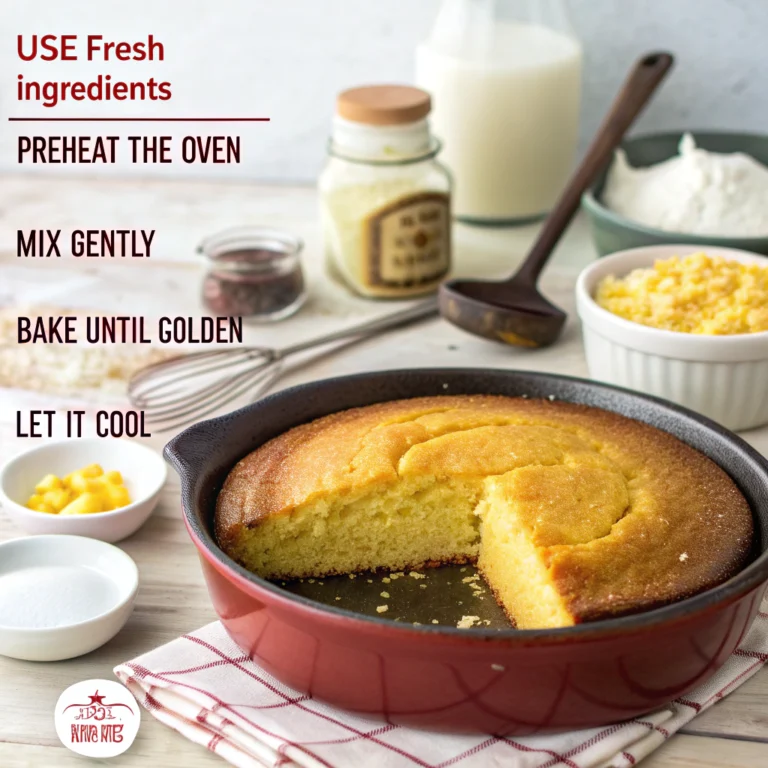
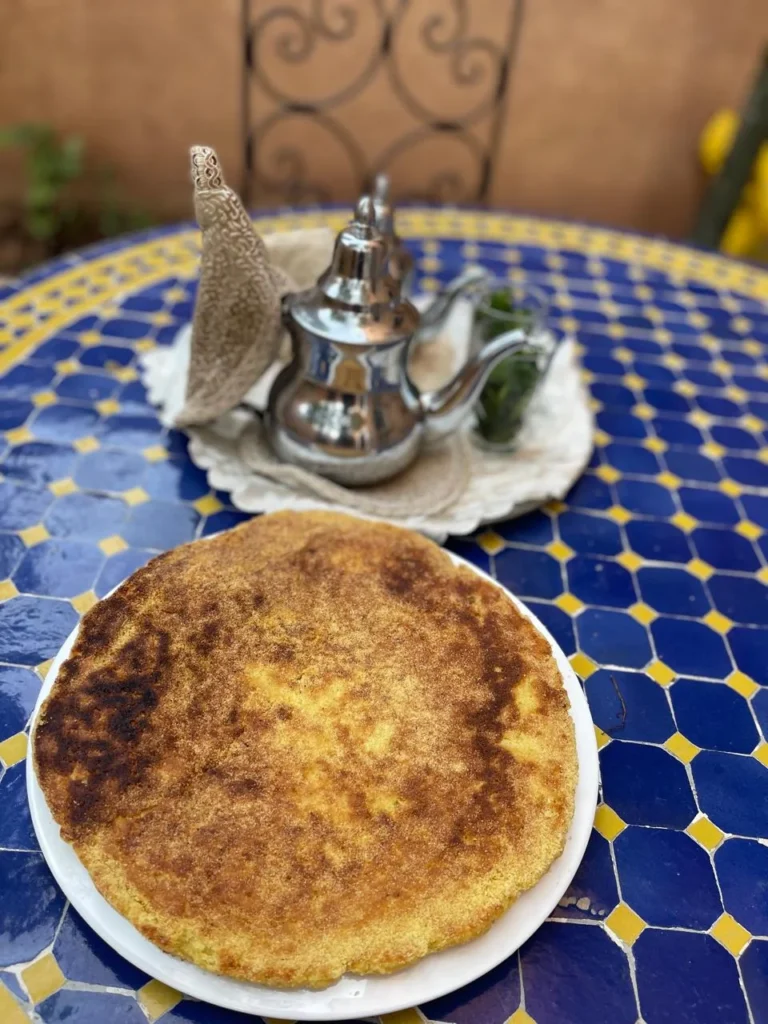
I can still remember the taste of her Harcha Beldia, baked in the oven. It was a traditional, homemade Harcha, wonderfully soft inside, with a texture so special that every bite seemed to reveal something new.
Its flavour was somewhere between savoury and slightly sweet.
And then there was its colour, an intense shade created by the traditional corn used to make this Corn Harcha.
But when I think about it today, I realise that it isn’t only the taste I remember.
It is everything that surrounded it.
The Walk Home from School
I will never forget those evenings when my older sister Loubna and I walked home from school.
We finished school around 6 p.m. and walked all the way from Oued Dahab School to our home in the Tichka neighbourhood of Ouarzazate.
It was cold.
Sometimes it rained. At other times, it snowed in front of our house.
And when the snow mixed with the rain, the hail and the rays of sunshine, Ouarzazate became absolutely beautiful through my childhood eyes.
I would put on my little boots decorated with teddy bears, take my sister by the hand, and we would walk through the snow.
I would look at the mountain, that beautiful mountain where we had spent so many hours playing with the children from our neighbourhood.
I still remember our neighbours: the Berrada family, the Bouichouiha family, and so many others.
I remember the people, the homes and the faces.
Those who are still with us, and those who have passed away. May God bless them.
I remember our house so clearly that I feel I could rebuild it room by room in my mind.
A Home Filled with Memories
I was born on 10 August 1985, at Sidi Hssaine Hospital, after my parents had lived in the Castor neighbourhood.
A woman named Mrs Hidrane was present for the births of the four daughters in our family: Amina, Loubna, Sara and Soukaina.
Four girls.
Four sisters.
And so many memories shared around the same table.
I sincerely believe that some of the most beautiful years of my life were spent in Ouarzazate.
I would not want to forget a single day of them.
The Smell of My Mother’s Harcha
When we opened the door after coming home from school, we were hungry.
And all it took was the smell coming from the kitchen to know.
Mum had made Harcha.
That warm, comforting aroma filled the house from her little kitchen.
I say “little kitchen”, but sometimes I wonder: was the kitchen really that small, or was it simply because I was so little myself?
We would sit around a small white table with little handmade chairs, Beldi style too.
Early in the morning, Mum would also make bread while listening to her little brown radio.
I remember that radio.
I even remember the songs that used to play on it.
Yes… those were beautiful days.
Saida’s Tea and Harcha Straight from the Oven
When we returned from school, tea was, of course, always waiting for us.
Its aroma alone was enough to make us even hungrier.
Each of us had her own little glass.
Mum, whom some people called Saida, others Essaadia, and others Souad, would take the time to cool each glass of tea for us.
She always paid attention to the smallest details.
And then came the moment we were all waiting for.
She would cut the Harcha, still piping hot and fresh from the oven, and place the pieces directly onto our plates.
One bite.
Then another.
Then the whole piece disappeared.
And then:
“Mum, more!”
How could we possibly resist?
There was the crispness of the Harcha, the little corn grains, the salt and, above all, the incomparable flavour of the olive oil from Papa El Kourchi’s home village: Skoura.
Simple ingredients.
But to us, it was a feast.
The Secret of Harcha Beldia: The Oujda Pan
In my memories, making an authentic Harcha Beldia also depended on one very special cooking utensil.
Mum’s famous Oujda pan.
She had chosen it carefully at the market.
The Oujda pan held an important place in our family’s Moroccan cooking, particularly for preparing Harcha and different types of traditional bread.
And Oujda reminds me of another family memory.
In 2008, I travelled with my parents and my sisters through this beautiful part of Morocco, visiting Saïdia, Berkane, Nador and Oujda.
We spent fifteen wonderful days there, and I still remember the beautiful landscapes, the food, the generous Moroccan pastries and, above all, the generosity of the people.
Another family memory I carry with me.
Seasoning the Cookware: A Tradition Mum Passed Down to Us
Before using certain traditional cooking utensils, Mum always took the time to prepare and season them properly.
She would use butter, and sometimes animal fat, before placing the utensil in the oven for a few minutes. She repeated the process over several days.
She used this method not only for her pan but also for tagines, the qassria, the traditional vessel used for preparing bread, and other cooking utensils.
I can still picture her doing all of this with such patience.
She taught me something important: when you truly love cooking, preparation does not necessarily begin when you start mixing the ingredients.
Sometimes, it begins long before.
I think I inherited some of that patience from her.
From Mum’s Traditional Pan to My AllClad
The years have passed.
Naturally, the way I cook has changed too.
In 2026, I replaced several pieces of cookware that required long preparation and seasoning with an appliance that has become one of my favourites: AllClad.
The utensils change.
Our kitchens evolve.
But strangely enough, when my Corn Harcha begins to cook and its familiar aroma fills my kitchen, I feel the same emotion all over again.
As though somewhere, somehow, Mum’s little kitchen never really disappeared.
Cooking Harcha with AllClad
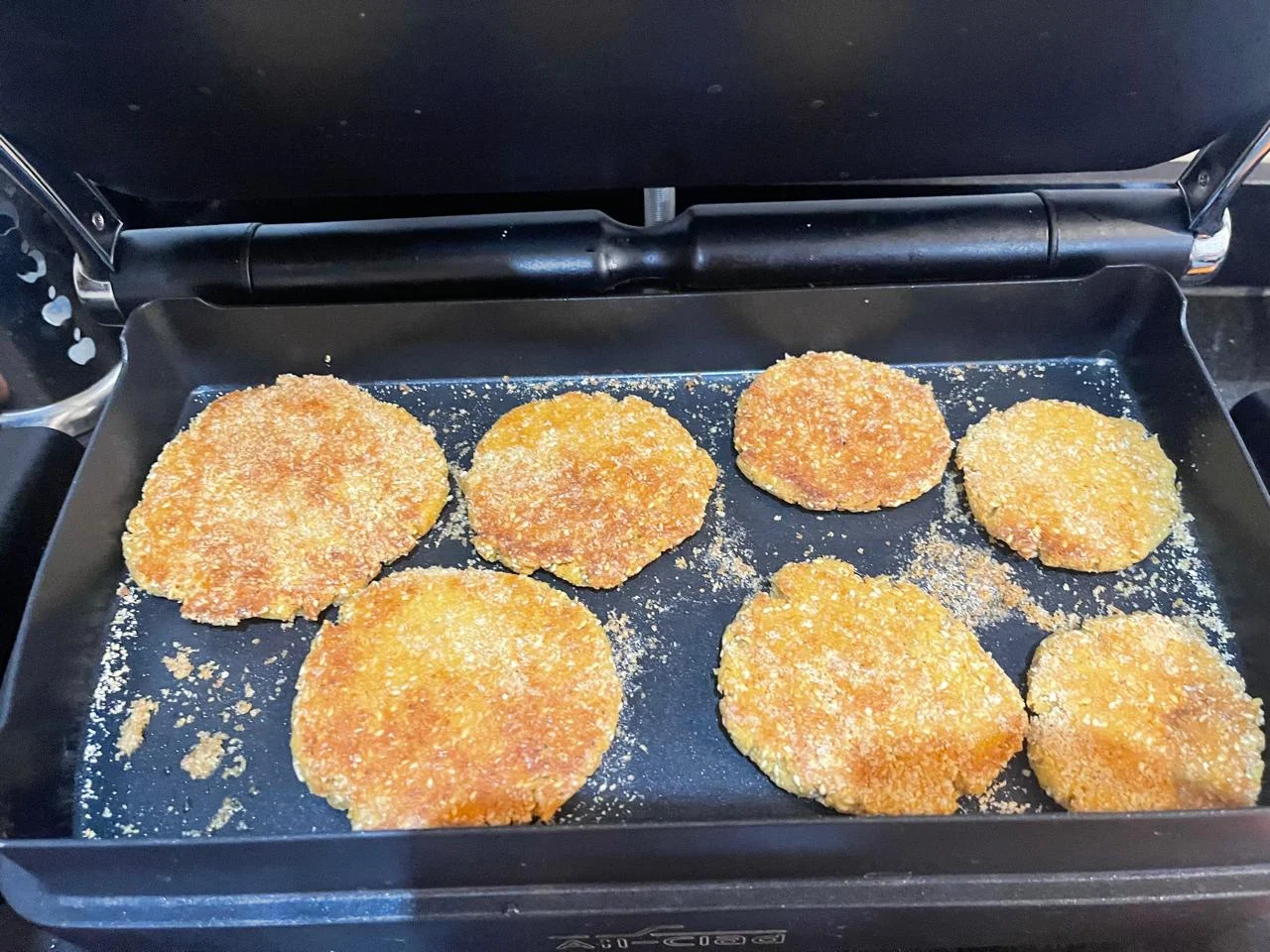
- Set your AllClad appliance to manual mode.
- Set the temperature to 240°C (464°F) and press OK.
- When flattening the corn-and-wheat dough balls, you can rub a very small amount of oil onto your hands. This step is optional because the mixture already contains olive oil.
- Cook your Corn Harcha, keeping an eye on it until you achieve the texture and colour you prefer.
My Tip
To vary the flavours of this Harcha recipe, you can replace the olive oil with argan oil or coconut oil.
Personally, olive oil will always have a special place in this recipe because its aroma takes me straight back to Skoura and to memories of my father.
Conclusion: Sometimes a Recipe Holds an Entire Lifetime
Today, whenever I prepare this Moroccan Corn Harcha, I understand that perhaps I am not simply trying to recreate a recipe.
I am searching for a scent.
A kitchen.
A little brown radio.
A white table.
My mother’s hands.
My sisters around me.
The cold of Ouarzazate, my little teddy-bear boots, the snow on the way home, the mountain, and that childhood excitement of knowing what was waiting for us behind the door.
My Mother’s Harcha has travelled through the years with me.
Today, the traditional pan may have given way to my AllClad, but the recipe still carries the same story.
The story of Saida Errabbouhi.
The story of Papa, of Skoura, and of my sisters.
The story of Ouarzazate.
And my story.
Because, in the end, some recipes are not passed down simply through ingredients and measurements.
They are passed down through memories.
Every bite of this homemade Harcha takes me back to my childhood in Ouarzazate, where simple ingredients and traditional recipes created unforgettable memories. Made with love, this delicious Moroccan Harcha recipe celebrates the authentic flavors of Moroccan cuisine and the beauty of homemade food.
The combination of fine semolina, olive oil, and traditional preparation gives this Harcha recipe its unique texture: golden and slightly crispy on the outside, yet soft and tender inside. A drizzle of fragrant olive oil brings out the authentic taste of this traditional Moroccan bread.
For me, Harcha from Ouarzazate is more than just a recipe. It is a connection to my roots, my family, and the beautiful food traditions passed down from one generation to another.
Whether enjoyed warm at breakfast or during afternoon tea with Moroccan mint tea, this homemade Harcha is a little piece of Morocco that deserves a place in every kitchen.
Try this traditional Harcha recipe with olive oil and bring the authentic taste of Ouarzazate into your home.