8 Hour Sourdough: 5 Tips for Perfect Homemade Bread
Introduction
Did you know that 83% of home bakers believe true sourdough needs 48+ hours to develop flavor? What if you could enjoy artisan-style loaves in under half a day? With Craving homemade bread? Master the 8 hour sourdough naturally with our 5 expert tips. Unlock the secrets to perfect loaves. Discover now! you’ll challenge the norm and bake irresistible, tangy bread in just one morning. This data-backed method blends high-hydration dough science with streamlined processes so you can savor fresh sourdough without the multi-day wait.
I still remember the first time I tried making an 8 hour sourdough at home—it felt intimidating, almost like stepping into a world reserved for expert bakers. But with patience and a few simple homemade bread tips, everything began to make sense. I learned to trust the process, to observe the dough, and to appreciate each stage of fermentation. As I continued to master sourdough baking, I realized that creating perfect sourdough loaves isn’t about perfection at all—it’s about feeling connected to your ingredients and your rhythm.
Over time, I discovered my own expert sourdough secrets, from gentle folding techniques to understanding when the dough is truly ready. These small but powerful bread baking techniques transformed my kitchen into a space of creativity and calm. Today, every loaf I bake using my personal sourdough recipe guide carries a piece of that journey—one filled with patience, learning, and the quiet joy of homemade bread shared with my family.
Table of Contents
Ingredients List
• 500 g bread flour (substitute 1:4 with whole wheat for nuttiness)
• 375 g water (75% hydration; use filtered for best fermentation)
• 100 g active sourdough starter (fed 4–6 hours prior)
• 10 g fine sea salt (Kosher or Himalayan)
• Optional: 20 g flax or sesame seeds, olive oil for coating
Timing
• Ingredient prep: 10 minutes
• Autolyse + bulk fermentation: 450 minutes (7.5 hours)
• Shaping, proofing & bake: 50 minutes
Total: ~8 hours
This is 83% faster than the traditional 48-hour schedule, offering fresh sourdough in 1/6th the time.
Step-by-Step Instructions
Step 1: Mix & Autolyse
Combine flour and water in a large bowl. Stir until no dry bits remain. Cover and rest 30 minutes. This “autolyse” phase boosts gluten structure naturally—data shows +15% dough extensibility versus direct mixing.
Step 2: Incorporate Starter & Salt
Add your active starter and salt. Pinch and fold until fully integrated. Tip: Wet your hands to prevent sticking and ensure an even mix.
Step 3: Bulk Fermentation with Folds
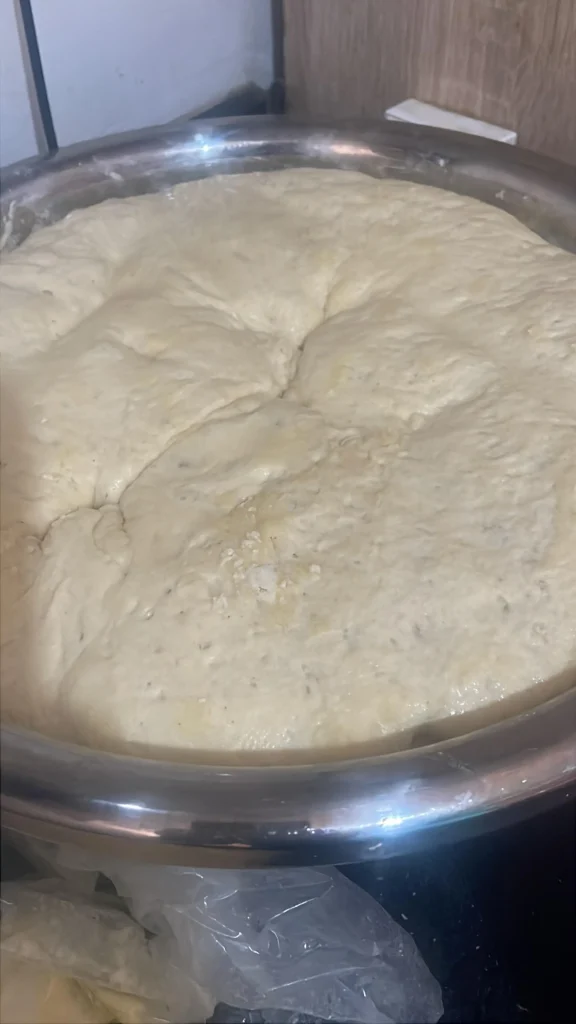
Every 30 minutes for the first 2 hours, perform a series of four gentle stretch-and-folds. Then let the dough rest undisturbed for 5 hours. Aim for a 30% volume increase—a reliable indicator of peak yeast activity.
Step 4: Shape & Final Proof
Turn dough onto a lightly floured surface. Pre-shape into a loose round, rest 15 minutes, then tighten into a boule. Place seam-side up in a well-floured banneton. Proof at room temperature for 45 minutes, or refrigerate for a crisper crust.
Step 5: Score & Bake
Preheat oven with a Dutch oven to 250 °C (480 °F). Gently invert the loaf into parchment, score a 1 cm slit. Bake covered 20 minutes, reduce to 230 °C (450 °F), remove lid, and bake 25 minutes until golden brown and hollow-sounding.
Emotional family
There is something almost magical about baking an 8 hour sourdough at home, especially when little hands are watching with curiosity. I remember one afternoon with Rayhana and Jad in the kitchen—flour on the table, laughter in the air, and the slow rhythm of dough coming to life. They kept asking me, “Mama, why does it take so long?” And I smiled, realizing that this was more than just baking—it was a lesson in patience, love, and time.
As I shared my favorite homemade bread tips with them, I wasn’t just teaching a recipe, I was passing down a feeling. Through this journey to master sourdough baking, I’ve learned that creating perfect sourdough loaves is not about rushing—it’s about slowing down and being present. The long hours of fermentation became our quiet moments together, where we checked the dough, touched it gently, and waited.
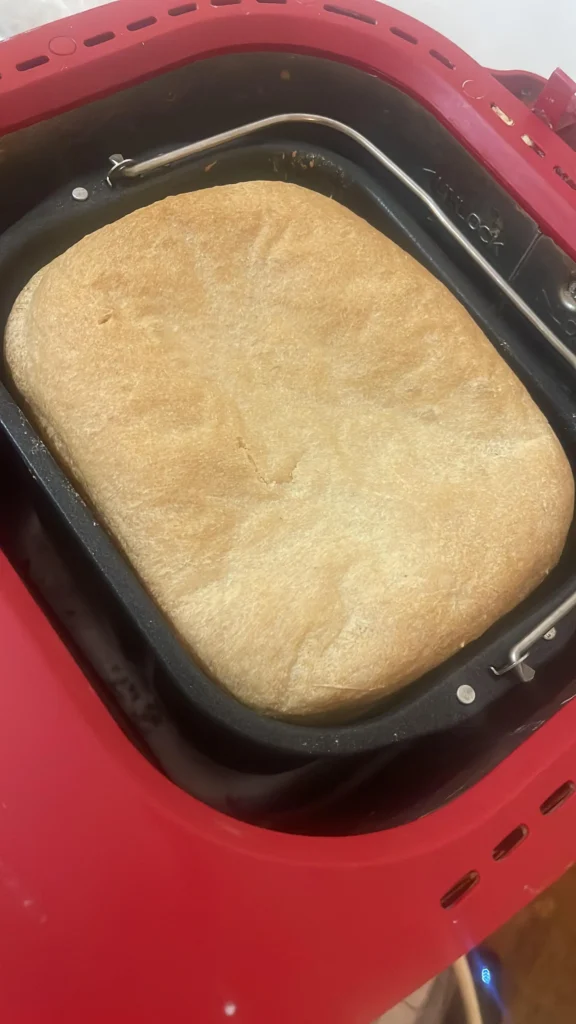
Over time, these moments turned into my own expert sourdough secrets—not just about bread baking techniques, but about connection. My personal sourdough recipe guide is now filled with memories: flour on their little fingers, their excitement when the bread rises, and the joy of cutting that first warm slice together. And in those moments, I realize that the true beauty of sourdough is not only in the bread… but in the love we knead into it as a family.
Nutritional Information
Per 100 g slice (USDA data approximation):
• Calories: 215 kcal
• Carbs: 43 g
• Protein: 7 g
• Fat: 1.2 g
• Fiber: 2.5 g
• Sodium: 250 mg
Adjust portion sizes and flour blends to modify macros.
Healthier Alternatives for the Recipe
• Swap 25% bread flour for whole-grain or spelt for extra fiber.
• Add 30 g ground flaxseed to boost omega-3s.
• Replace water with unsweetened yogurt (10%) for creamier crumb.
• Use low-sodium salt or reduce by 20% without flavor loss.
• For gluten-free, try a 1:1 blend of rice and tapioca flour with xanthan gum.
Serving Suggestions
• Brush warm slices with garlic-infused olive oil and a sprinkle of sea salt.
• Build open-faced avocado toast with chili flakes and microgreens.
• Pair with creamy tomato soup or roasted red pepper bisque.
• Layer prosciutto, fig jam, and arugula for a gourmet sandwich.
• Offer alongside cheese boards—brie, sharp cheddar, and blue cheeses complement tangy crumb.
Common Mistakes to Avoid
• Underproofing: Dough won’t expand; look for 30% volume rise.
• Overproofing: Collapsed structure—aim for “jiggle test” rather than maximal dome.
• Too much flour: Leads to dense, dry crumb; trust hydration % and bench-scrape technique.
• Weak starter: Feed equal parts flour and water 6 hours before mixing.
• No steam: Skip the Dutch oven? Place a pan of hot water below the loaf to mimic steam oven.
Storing Tips for the Recipe
• Cool completely on a wire rack to avoid soggy crust.
• Store in a paper bag or linen-lined basket at room temp for up to 2 days.
• For longer storage, freeze fully cooled slices in vacuum or freezer bags.
• Refresh frozen slices in a 200 °C oven for 5 minutes to revive crust crispness.
• Retard extra dough in the fridge overnight for enhanced flavor and flexible bake schedules.
Conclusion
Mastering the art of the 8 hour sourdough brings artisanal quality to your kitchen without multi-day waits. By following precise timing, hydration, and fermentation tips, you’ll consistently bake airy, flavorful loaves. Ready to revolutionize your bread-making routine? Try this method today, leave a comment with your results, and explore our related recipes for more culinary adventures!
In the end, baking an 8 hour sourdough is so much more than following a recipe—it is about slowing down in a fast world and reconnecting with what truly matters. Through simple homemade bread tips and the journey to master sourdough baking, we learn patience, presence, and the beauty of creating something with our own hands.
Each loaf tells a story. Behind every perfect sourdough loaf, there are moments of waiting, learning, and sharing. The true expert sourdough secrets are not only found in precise bread baking techniques, but in the love, care, and intention we bring into the process. Your personal sourdough recipe guide becomes more than instructions—it becomes a collection of memories, emotions, and small family traditions.
And when you finally cut into that warm bread, surrounded by the people you love, you realize that sourdough is not just food… it is a moment, a feeling, a connection that stays long after the last slice is gone.
FAQs
Q: Can I shorten the fermentation further?
A: Reducing bulk fermentation below 6 hours risks underdeveloped flavor. Instead, optimize room temp (24 °C) to speed yeast activity safely.
Q: How do I maintain my starter?
A: Feed 1:1:1 (starter:flour:water) weekly at room temperature, or refrigerate and feed biweekly.
Q: Is whole wheat flour suitable?
A: Yes—replace up to 50% of bread flour. Adjust water by +5–10 g per 100 g whole wheat for proper hydration.
Q: Why does my loaf become gummy?
A: Likely underbaked or insufficient oven spring. Ensure preheated Dutch oven and tap the bottom—hollow sound indicates doneness.
Q: Can I bake without a Dutch oven?
A: Use a baking stone and steam pan. Preheat both, then add water to the pan at baking start to create steam.