Skoura Mint Tea: BARRAD, SINIA, TAFERNOUT and Childhood Memories
Preparing Skoura Mint Tea
Introduction: After My Love Story with Bread
Following my first writings about bread and this love story with bread that began for me at a very young age, I am now writing my second article.
Thank you for reading this post, don't forget to subscribe!After sharing with you part of my story and my memories around traditional Moroccan bread, I wanted to dedicate this new article to a key element that is necessary to accompany all kinds of bread, especially TAFERNOUT and traditional bread.
Because in our home, bread never really comes alone. It is accompanied by moments of sharing, memories, family, but also by this unforgettable drink that holds a special place in our daily life: mint tea.
Today, I am going to tell you about SKOURA tea, the BARRAD (teapot), fresh mint نعناع, the SINIA, but above all, these childhood memories that remain engraved in my memory.
Table of Contents
Preparing Mint Tea
Every time he poured the tea from the BARRAD (teapot), I was delighted by the sound and the smell that came from the freshness of the mint.
We waited until all the glasses were filled before my cousin, with her gentle hands, gave each of us our glass.
Of course, there were many of us, men and women, watching this beautiful scene, this real painting, and witnessing the ritual of preparing the tea, which required a lot of love, patience and great attention.
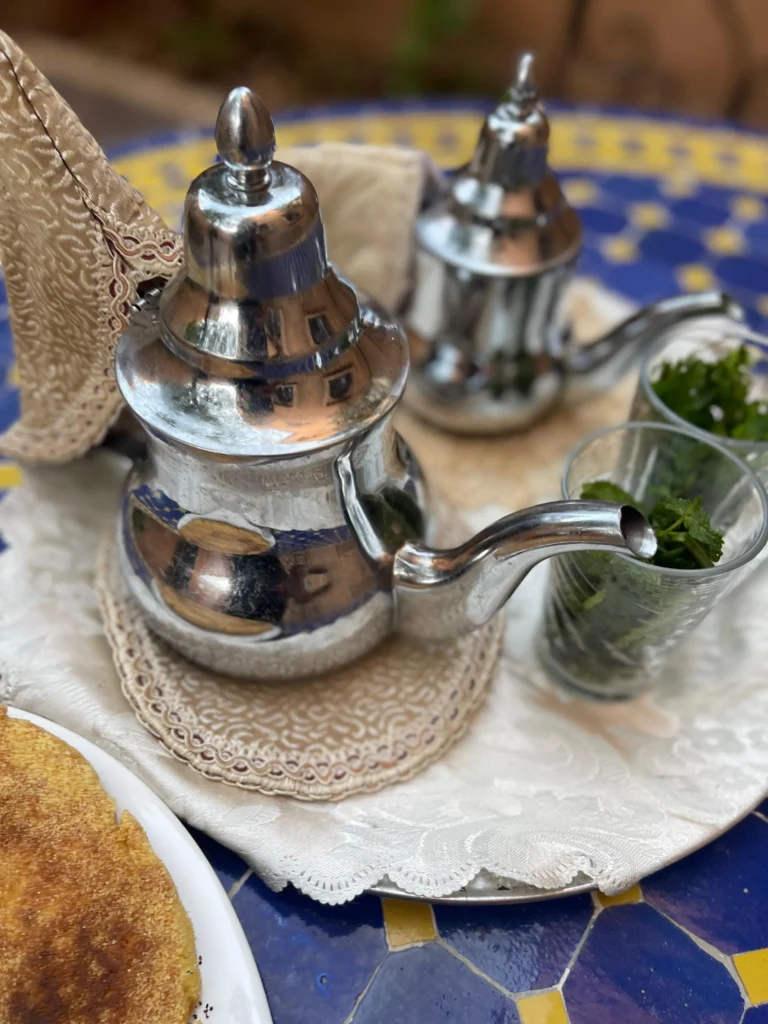
He would light the fire to prepare the boiling water and insisted that everything be carefully prepared in advance. Nothing could be missing: freshly rinsed mint, sugar placed in a silver-colored container, loose-leaf tea, and the glasses, carefully cleaned and arranged on the trays called SINIA.
The preparation of the tea always began with great care. First, he would boil the water over the fire. Once the water was very hot, he would put the green tea leaves into the BARRAD and rinse them with a little hot water in order to clean the tea and remove its first bitter taste. This first water was sometimes thrown away, and then he would add a new amount of boiling water.
He would then add the sugar, in a generous quantity according to the habits of the household, and then came the most important moment: the fresh mint.
The beautiful branches of mint نعناع, carefully washed and drained, were placed inside the BARRAD. The freshness of the mint would then mix with the aroma of the tea and fill the room with a wonderful smell.
The BARRAD was then placed back on the fire, or left for a few moments so that the tea could properly infuse. The tea needed time to develop its taste and aroma. Nothing was done in a hurry.
The person preparing the tea would sometimes taste a small amount in a glass and then pour it back into the BARRAD, in order to mix the tea, sugar and mint. This gesture could be repeated several times until the desired taste was achieved.
Then came the moment we were all waiting for: serving the tea.
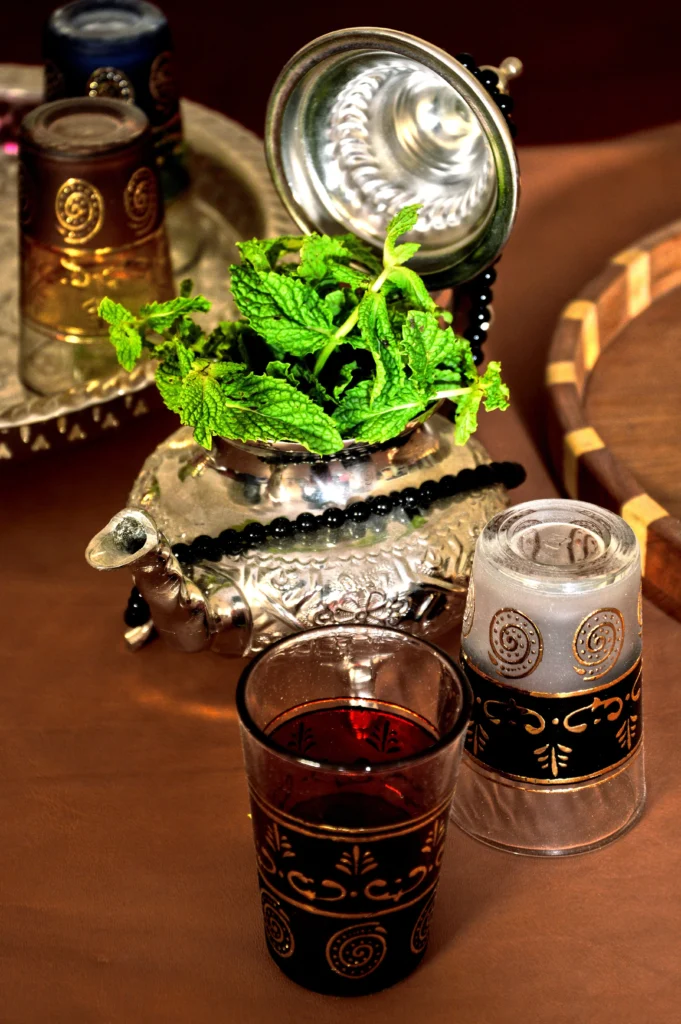
Serving the Tea, at Last
He would take the BARRAD and pour the tea from a height, with a precise and elegant movement, allowing the stream of tea to flow into the small glasses.
This gesture was not simply a way of serving the tea; it was part of the spectacle and the ritual. The sound of the tea pouring, the aroma of the fresh mint, and the warmth coming from the glasses created a very special atmosphere.
Every time he poured the tea from the BARRAD, I was delighted by that familiar sound and the smell of fresh mint. We waited until all the glasses were filled before my cousin, with her gentle hands, gave each of us our glass.
We were many gathered around the SINIA, watching this magnificent scene, like a living painting.
We watched every gesture carefully: the fire, the boiling water, the BARRAD, the tea leaves, the sugar, the fresh mint and the small, carefully cleaned glasses.
This ritual of preparing and serving Moroccan mint tea represented much more than simply preparing a drink. It was a moment of sharing, hospitality and togetherness. Every gesture had its importance and every detail was prepared with love.
The tea was prepared in front of us, live, and we felt as though we were witnessing a real family ceremony.
The BARRAD, the SINIA, the fresh mint and the aroma of the tea were all part of this scene that I still keep in my memory as an image full of warmth, family and tradition.
Sitting on El Herdal, the Rug of My Childhood
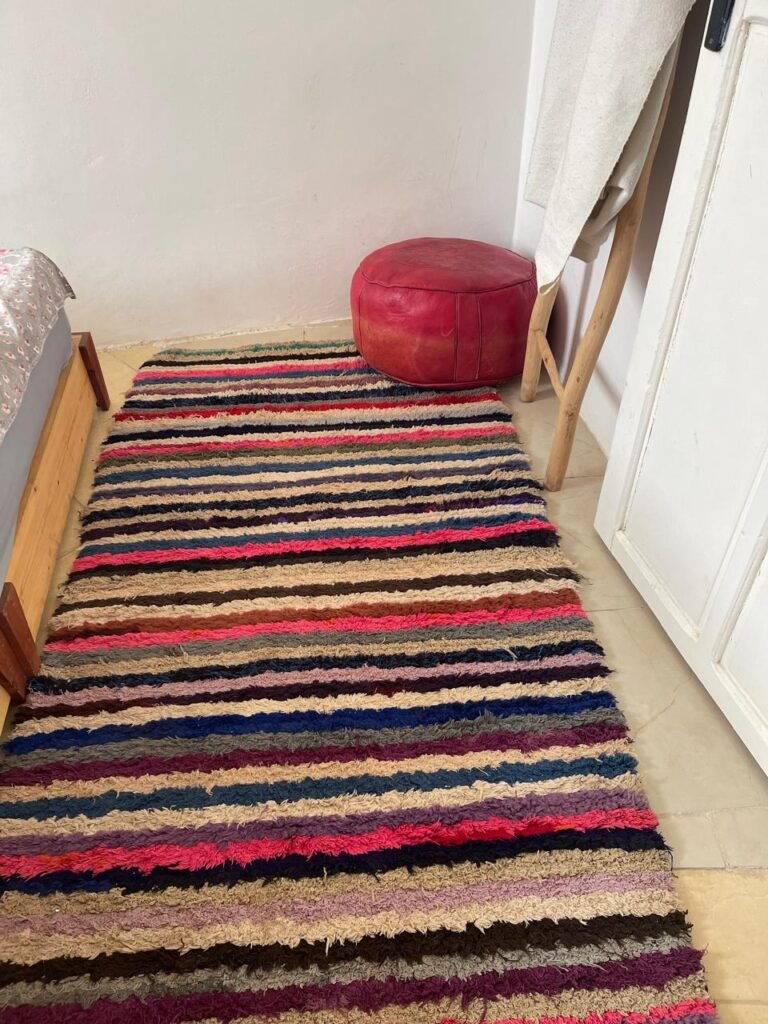
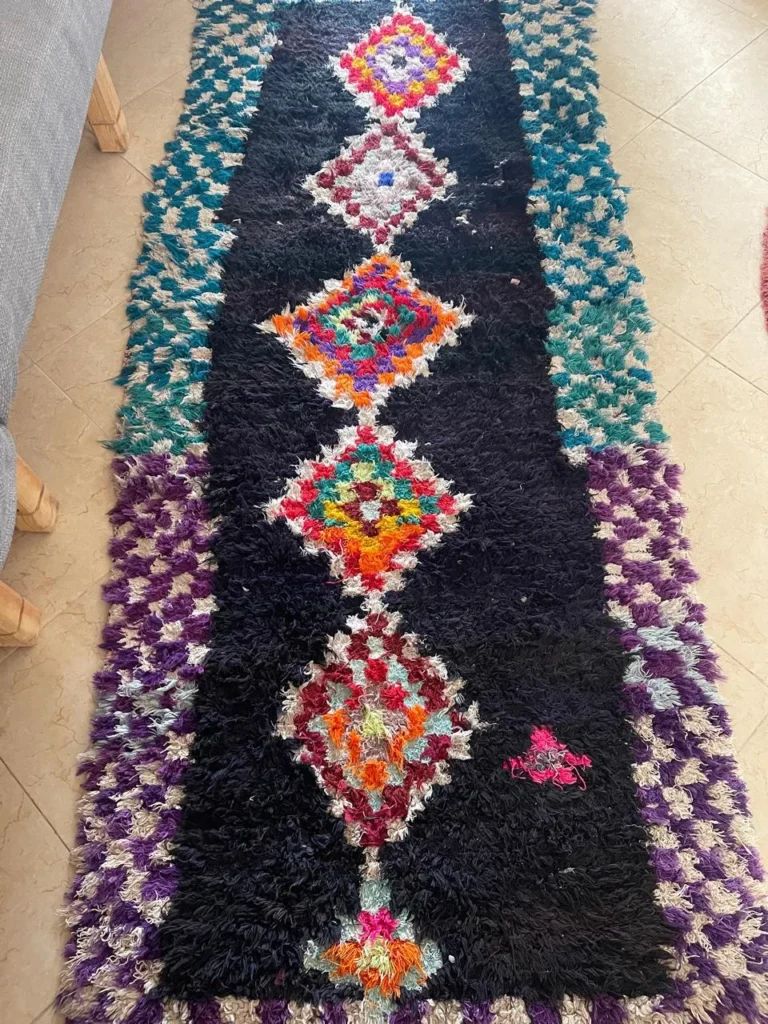
Sitting on a rug called El Herdal, a rug prepared with great delicacy and love, I thought of this phrase: everything made by hand is priceless.
The girls, my cousins, would spend several days and sometimes several months weaving it with pieces of clothes that had already been used and that they no longer needed, in different and very elegant colors that matched each other beautifully.
El Herdal in pink and blue, brown and yellow, orange and green… My cousins were true artists who started with nothing to create a wonderful handmade work of art, whose true value they perhaps did not even realize.
The Memories of My Grandfather Si Abderrahman Bel Korchi
Sitting on the rug, I watched the ray of sunlight coming through the tiny square window, gently touching the soft air that entered through the small, very old wooden door, dating back to the time of my grandfather, Si Abderrahman Bel Korchi.
Yes, he was my paternal grandfather, and I have always been proud to listen to the stories of his glory that my father, El Kourchi, used to tell me about him.
A brave man who was respected in his homeland for his knowledge as a natural healer. He treated the people of SKOURA with the delicacy of his magical hands.
He was the doctor, the nurse, the father and the wise man.
SKOURA Tea and TAFERNOUT
Sitting on the El Herdal rug, I waited for my turn to serve myself some tea.
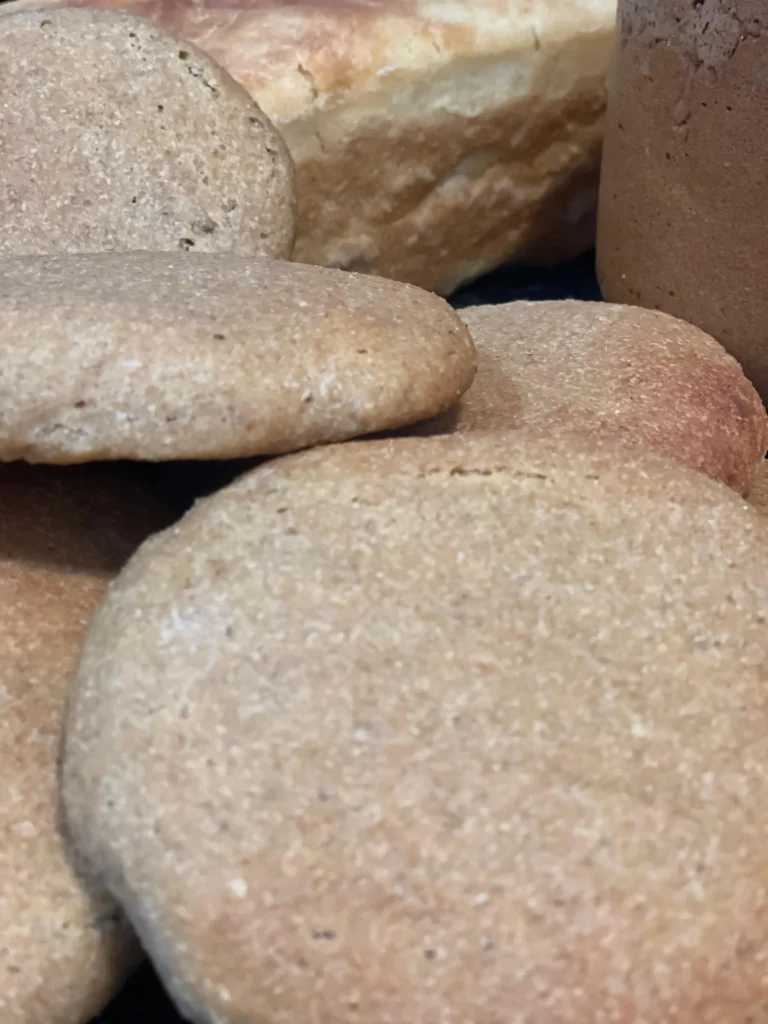
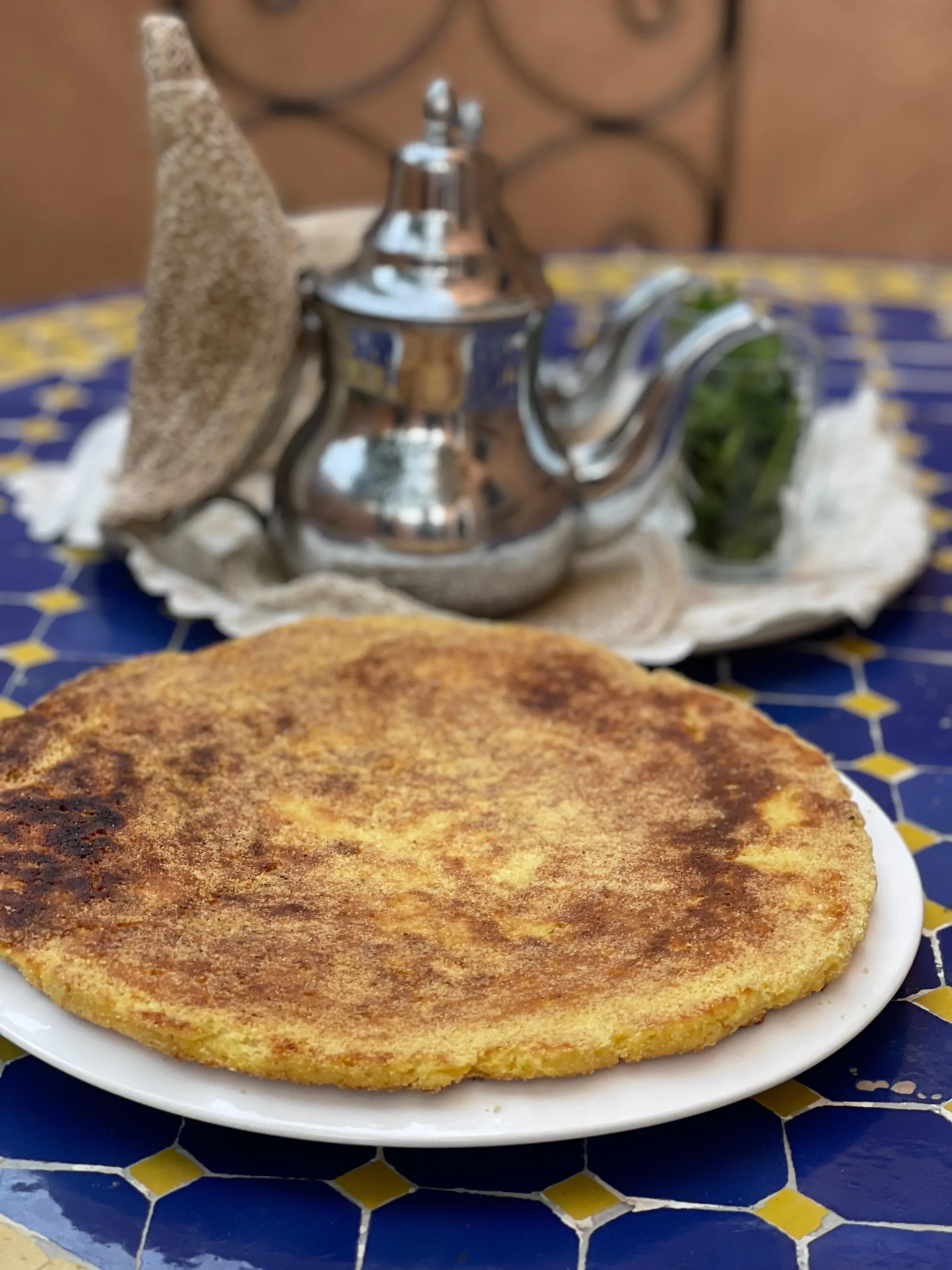
The BARRAD (teapot) knew how to keep the flavors and aroma in harmony, so that I could enjoy the tea with TAFERNOUT, prepared from dawn, which I would mix with local olive oil from SKOURA.
This is the image I keep in my memory: mint tea, TAFERNOUT prepared from dawn, olive oil from SKOURA, the El Herdal rug, my cousins, my family and this little room filled with memories.
Today, I Want to Introduce You to SKOURA Tea
Today, I want to introduce you to SKOURA tea, mint tea نعناع.
Of course, at that time, I only knew نعناع Al Qafila tea. But today, there are different brands, different qualities and different names known all over the world.
For me, however, tea will always be the tea of my childhood.
The tea of the BARRAD, the SINIA, the fresh mint, the TAFERNOUT and the local olive oil.
This is the tea I keep in my heart, the tea that accompanies meals, traditional bread and, above all, moments spent with family.
And when I think back to those moments, I understand that it was not simply tea that we were drinking.
We were sharing a story, a tradition and a piece of our childhood.
The Different Types of Mint Used for Moroccan Tea
When we talk about Moroccan tea, we immediately think of mint نعناع, but there are different types of mint. Depending on the region, the family and their habits, the aroma and taste can be different.
The best known is beldi mint (نعناع بلدي), a traditional mint that is highly appreciated in Morocco for preparing tea. It has a fresh and very recognizable aroma, the kind of aroma that immediately reminds me of Moroccan homes and moments spent around the BARRAD.
There is also Marrakchi mint, which is very appreciated for its aroma and freshness. In some regions, other varieties of mint are also grown and used according to what is locally available and according to each family’s preferences.
For me, whatever variety is used, fresh mint remains essential to Moroccan tea. It is what gives the tea that special aroma that spreads throughout the house as soon as the BARRAD is placed on the table.
And sometimes, all it takes is the smell of a few نعناع mint leaves for the memories to come back: the SINIA, the BARRAD, the TAFERNOUT, the olive oil from SKOURA, and an entire childhood coming back to life around a simple glass of tea.
Conclusion: My Childhood Memories Around SKOURA Tea
As I write this passage, I realize that the emotions come back one by one. Every word takes me back to the details of my childhood, to those little things that I sometimes thought I had forgotten, but that are still very much present in my memory.
The simple memory of tea being poured from the BARRAD, the aroma of fresh mint, the little glasses placed on the SINIA, the El Herdal rug, the light coming through the small window and the smell of TAFERNOUT prepared from dawn take me straight back to SKOURA.
I see my cousins again, my family, the hands that worked with patience, the conversations, the smiles and that simplicity that gave so much value to these moments.
By writing today about SKOURA tea, I am not simply telling the story of how a drink was prepared. I am telling a part of my childhood, a part of my family and a part of the traditions that shaped my memories.
The BARRAD, the mint, the SINIA, El Herdal, TAFERNOUT and the olive oil from SKOURA have become much more than simple words to me. They are little pieces of a story that I still carry inside me.
And perhaps this is what I love most about writing: being able to return, for a few lines, to the places and moments that marked my childhood, almost feeling the aroma of the mint again, hearing the sound of the BARRAD, and finding, around a glass of tea, that family warmth that I have never forgotten.