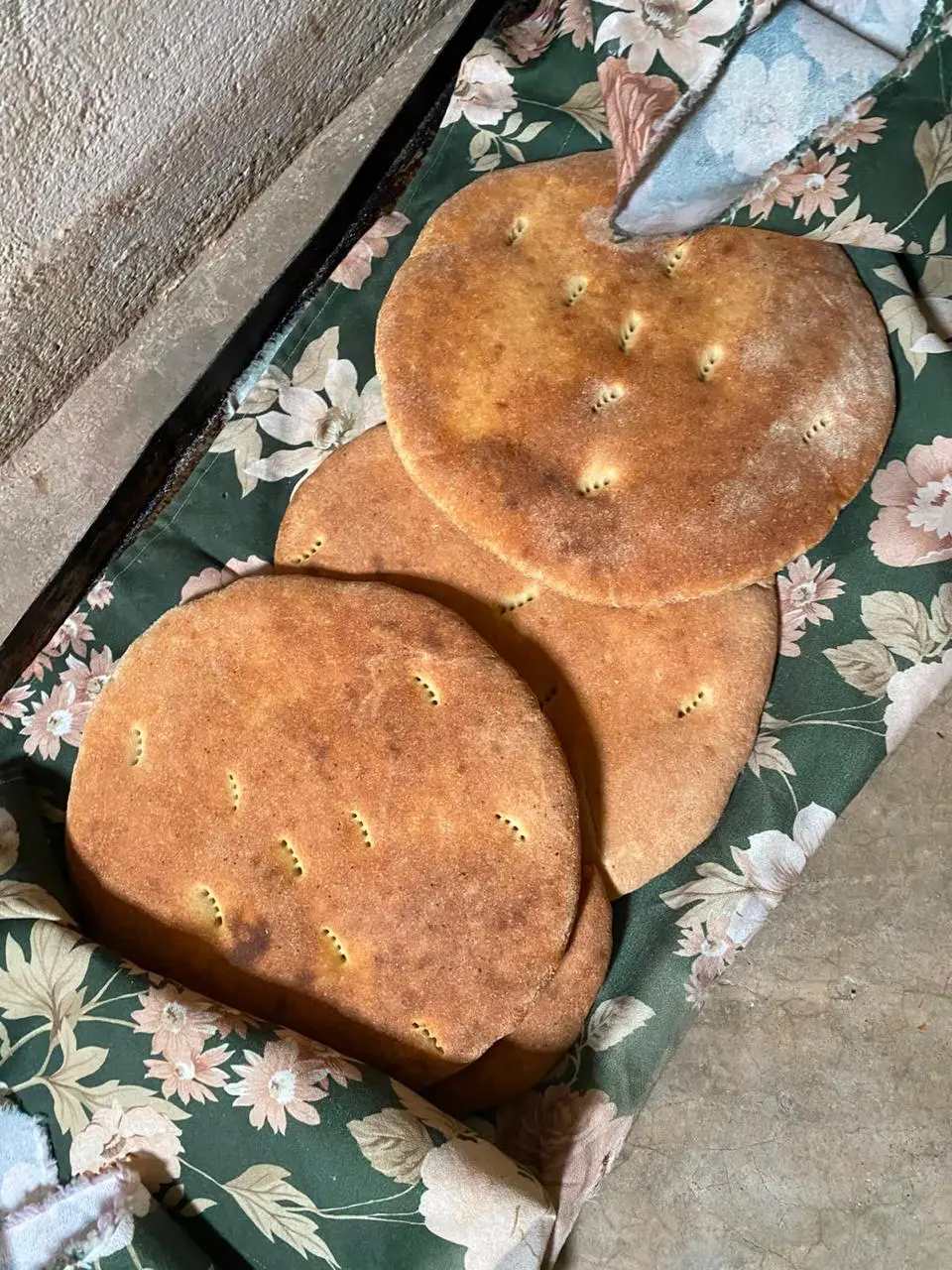
Whole Wheat Sourdough Bread in a Beldi Oven by Khalti Khaddouj, Casablanca 1992
The third article in my bread story series
Hello,
Thank you for reading this post, don't forget to subscribe!Today, I am sharing the third article in my series about my bread story, a story that takes me once again back to my childhood, to my family memories, and to those unforgettable aromas that stay somewhere deep inside our memory.
This time, I am taking you to Casablanca, in 1992, and to a bread that deeply marked my childhood: Whole Wheat Sourdough Bread, prepared by my aunt Khaddouj, whose real name was Khadija.
And yet, this memory came back to me this morning, in 2026.
While taking my son Jad to school at around 8:30 in the morning, I suddenly smelled the aroma of warm bread mixed with the scent of butter.
That smell moved me.
Within a few seconds, I was taken years back in time.
I could see myself again in Casablanca, with my aunt.
At that time, mothers often prepared bread very early in the morning. I still remember my aunt sitting on the floor, placing a large traditional bowl called a KASRIYA in front of her, and beginning to knead and work the dough with her hands.
She worked slowly and patiently, as if she were preparing something much more precious than just bread.
It was a very simple recipe, but it was made with so much care and, above all, so much love.
The bread was prepared at home and, sometimes, it was taken to the neighborhood Beldi Oven to be baked.
The difference was simple: the oven at home used gas, while the traditional Beldi Oven baked the bread over a wood fire.
Both methods produced delicious bread, but Whole Wheat Sourdough Bread in a Beldi Oven had something special: the aroma of the wood fire, the warmth, and the traditional baking method that gave the bread a character impossible to forget.
Table of Contents
Whole Wheat Sourdough Bread: my aunt Khaddouj’s ingredients
To prepare my aunt’s bread, only very simple ingredients were needed.
Ingredients for Whole Wheat Sourdough Bread
For approximately 1 kg of flour:
- 1 kg whole wheat flour
- approximately 500 ml lukewarm water
- 1 generous tablespoon of salt, preferably sea salt
- 1 small teaspoon of sugar
- natural sourdough starter
But, as I always say, ingredients are not everything.
The real difference was in the hands that worked the dough.
The wheat flour prepared at home
The flour my aunt used had a story of its own.
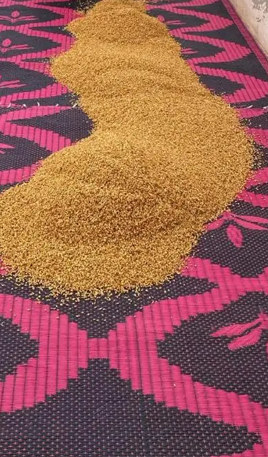
The wheat was carefully washed and then left to dry on the terrace of the house before being sorted to remove small stones and impurities.
Only the good grains of wheat were kept.
The wheat came from the family’s fields, from my aunt’s husband’s side of the family. It was naturally grown wheat, without added products, which gave the flour its authentic flavor.
Once the wheat had been prepared, it was taken to be milled and turned into flour.
It was this wheat flour, combined with the natural sourdough starter, my aunt’s hands, and the heat of the oven, that gave the Whole Wheat Bread its unique flavor.
When the bread entered the hot oven, a wonderful aroma filled the small space where my aunt prepared her bread.
The smell of wheat.
The smell of warmth.
A clean, authentic aroma that is almost impossible to describe.
And above all, the smell of childhood.
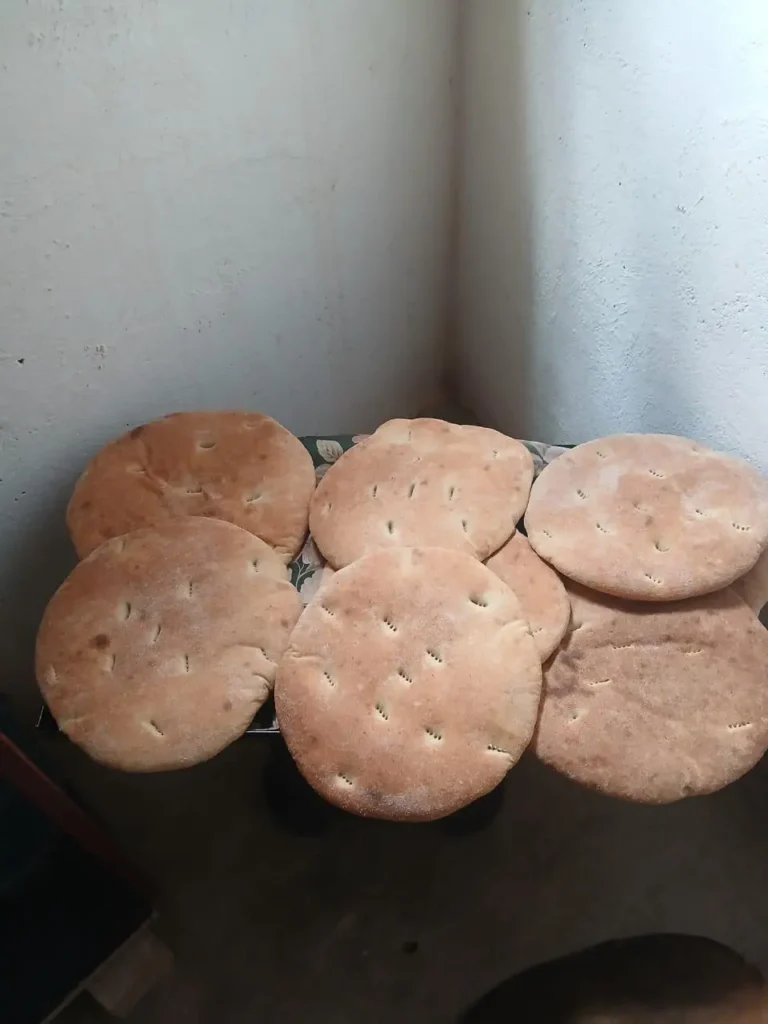
Khaddouj’s little hands: the secret of Whole Wheat Bread in a Beldi Oven
I am so happy to tell you the story of this Whole Wheat Sourdough Bread in a Beldi Oven, prepared by the little hands of my aunt Khaddouj.
Yes, those little hands.
Even today, despite the passing years, I still remember her fairy-like hands preparing so many wonderful things: meals, cakes, bread, and all those family recipes that we never forget.
After working the dough, my aunt divided it into several pieces.
She shaped several balls of dough and worked on each piece separately, sometimes adding a little flour to help shape them properly.
She then let them rest for a few minutes.
After that, she gently flattened them and covered them with a clean piece of cloth and a blanket.
The Whole Wheat Sourdough Bread was left to rest quietly before baking.
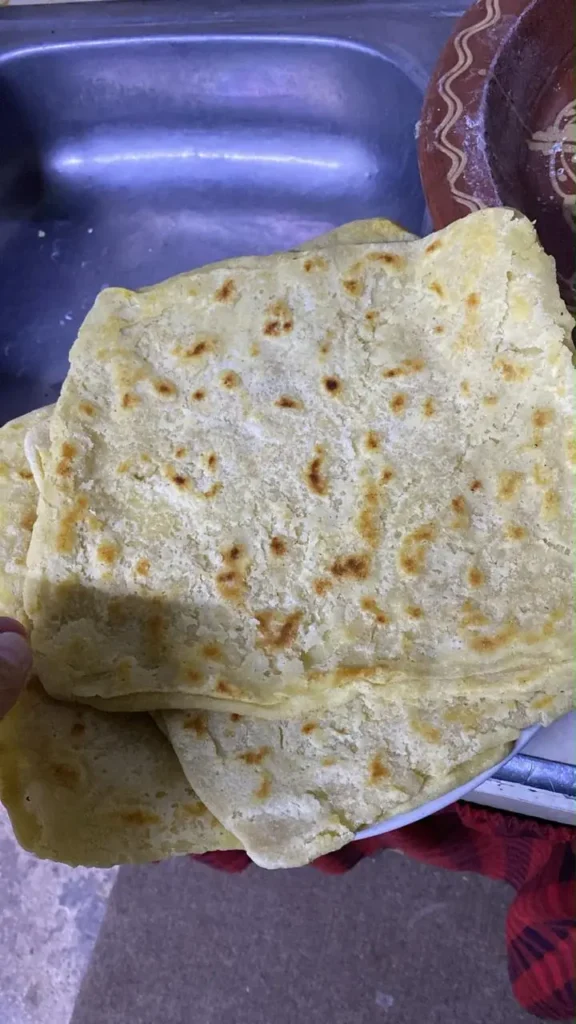
Baking Whole Wheat Bread in a Beldi Oven
While the dough was resting, the oven was preheated.
At home, it was a small gas oven, but it already had something magical about it.
It was small, but it knew how to do great things.
It made bread filled with love, memories, and above all, that little personal touch that only my aunt knew how to give.
Khaddouj would then take each loaf carefully placed on its piece of cloth.
She would make a few small holes with a fork or, sometimes, simply use her finger to make a small opening in the center.
I particularly loved this way of doing it.
Every loaf had its own shape, its little imperfections, and above all, the imprint of my aunt’s hands.
Once inside the oven, the loaves slowly began to rise.
And then the aroma appeared.
The magical aroma.
The smell of childhood.
The smell of love.
Whole Wheat Bread in a Beldi Oven was a traditional bread signed by my aunt Khadija, whom we affectionately called Khaddouj.
It was a mother’s bread.
A grandmother’s bread.
A bread she had learned to prepare following the guidance of my maternal grandmother, Hanna Mina.
She would place a few loaves in the oven and then add more as she went along, until all the bread was completely baked.
Butter on warm Whole Wheat Bread in a Beldi Oven
Of course, it was impossible to resist the smell of Whole Wheat Bread in a Beldi Oven.
As soon as the aroma of warm bread filled the air, we would come next to my aunt and ask for a piece.
And that warm piece of bread was immediately served with beldi butter, traditional Moroccan butter, white and freshly prepared.
In our family, we used to receive milk and traditional butter from the farm of my aunt Mbarka, my father’s aunt, who sadly passed away a very long time ago.
She had a farm with several cows and many calves.
I still remember the joy in the family whenever a cow gave birth to a little calf.
It was a true celebration.
There was milk, butter, and different kinds of cheese prepared at home.
So, when the Whole Wheat Bread in a Beldi Oven came out of the oven, we would take a piece while it was still warm and generously spread it with beldi butter.
I cannot even describe the deliciousness.
You could compare it to the best desserts in the world, but for me, nothing could match that little piece of warm bread with butter.
And above all, we never waited until the entire batch was finished baking.
We ate the bread as it came out.
That is why my aunt had to prepare a huge amount of Whole Wheat Bread in a Beldi Oven, so that enough would remain after the little snacking we did with our cousins.
Whole Wheat Bread in a Traditional Beldi Oven in the Houma
There was also a second way of baking the bread.
When my aunt wanted to bake her Whole Wheat Bread in a Traditional Beldi Oven in the Houma, she prepared the loaves and placed them in a large tray that we called LATA or WASSLA.
It was a large container where the bread was carefully placed.
She would then cover it with a clean cloth.
My aunt would leave the tray outside the door of the house.
The neighbors coming out of their homes would see the tray of bread and take it directly to the nearest traditional Beldi Oven in the neighborhood.
Baking over a wood fire
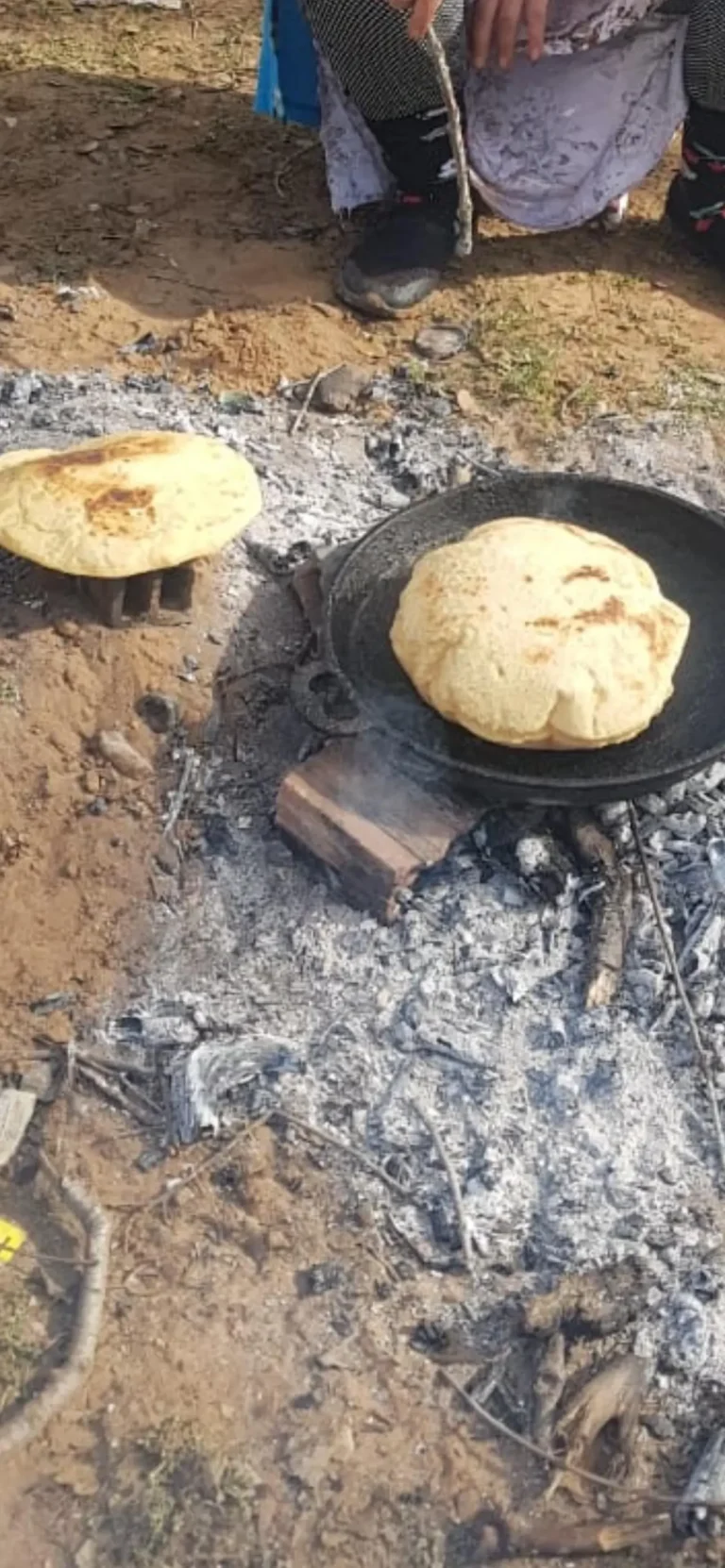
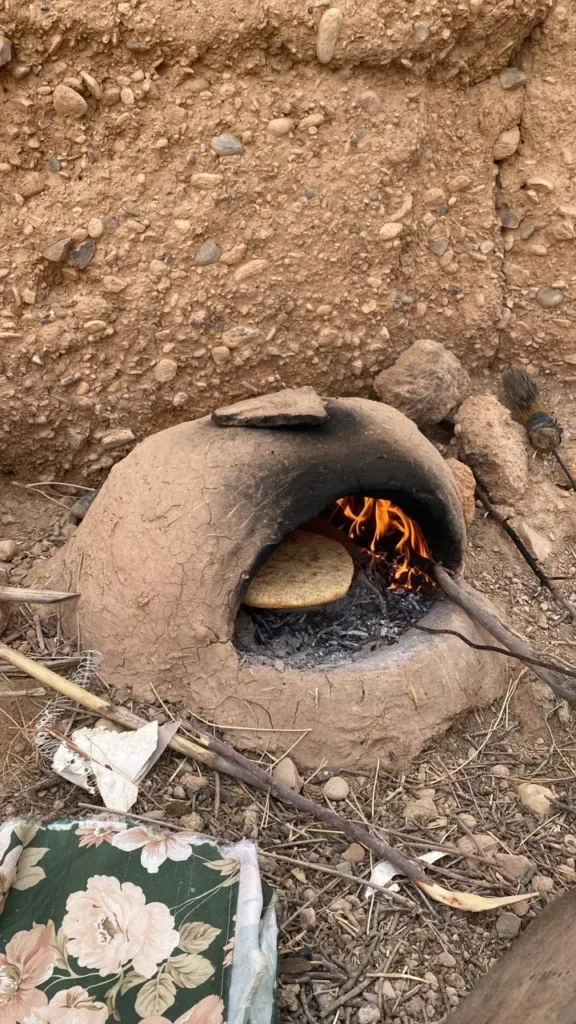
The Beldi Oven worked with a wood fire.
This traditional baking method gave the bread a unique aroma, warmth, and flavor that I still carry in my memories.
My aunt then simply had to wait and go collect her bread once it was fully baked.
And I cannot even begin to describe the smell.
Whole Wheat Sourdough Bread, baked over a wood fire, had a different aroma, deeper and warmer.
That smell has remained somewhere in my memory.
Since those days, I have never forgotten my aunt’s delicious recipes.
She did not only make bread.
She also had the art of making delicious cakes and many dishes that we all kept in our memories.
Natural Sourdough Starter: my grandmother Hanna Mina’s method
Since this Whole Wheat Sourdough Bread was made with a natural sourdough starter, I also want to share the memory of the sourdough starter prepared by my maternal grandmother, Hanna Mina.
Back then, there was no commercial yeast involved.
The natural sourdough starter was simply made with wheat flour and water.
All it required was patience.
The mixture naturally fermented over several days and gradually became alive, developing small bubbles and a slightly tangy smell.
It was this natural fermentation that gave Whole Wheat Sourdough Bread, baked in a Beldi Oven, its authentic flavor and distinctive texture.
Preparing the natural sourdough starter
A natural sourdough starter is made only with wheat flour and water, without adding commercial yeast.
It generally takes 5 to 7 days to obtain an active starter.
Day 1
Mix 50 g of wheat flour with 50 g of water in a clean container.
Mix until you obtain a thick, smooth paste. Cover loosely and leave at room temperature for 24 hours.
Day 2
A few small bubbles may begin to appear.
Add 50 g of wheat flour and 50 g of water, then mix.
Cover and leave for another 24 hours.
Day 3
The starter gradually begins to ferment and may develop a slightly tangy smell.
Remove approximately half of the mixture, then add 50 g of wheat flour and 50 g of water.
Mix and leave for another 24 hours.
Day 4
Repeat the same process: remove approximately half of the starter, then add 50 g of wheat flour and 50 g of water.
The starter should gradually become more active, with more bubbles appearing.
Day 5
Continue the same feeding process: remove half of the starter, then add 50 g of wheat flour and 50 g of water.
If the starter doubles in volume within a few hours and shows good activity, it may already be ready to use.
Days 6 to 7
If the starter is still not very active, continue the daily feedings in the same way.
When it becomes bubbly, slightly tangy, and doubles in volume after feeding, it is ready to be incorporated into the dough.
This natural sourdough starter gives Whole Wheat Sourdough Bread a natural fermentation, authentic flavor, and the characteristic texture of traditional bread.
Conclusion: a story of Whole Wheat Bread in a Beldi Oven
This Whole Wheat Sourdough Bread in a Beldi Oven is much more than a simple recipe to me.
It is a small part of my childhood.
It is Casablanca in 1992.
It is my aunt Khaddouj sitting on the floor in front of her KASRIYA, her little hands patiently working the dough.
It is the wheat carefully prepared, the natural sourdough starter quietly fermenting, the bread covered with a clean cloth, and then the Beldi Oven waiting to give it its warmth.
It is also the wood fire, the smell of warm bread, the beldi butter, the cousins waiting for their piece, and that impatience to taste the bread before the whole batch was even finished.
And today, so many years later, a simple smell of warm bread on a street in Marrakech, while I was taking my son Jad to school, was enough to take me back to my aunt.
Perhaps that is, after all, the magic of bread.
It feeds the body, but some recipes also feed the memory.
Every loaf tells a story.
And Khaddouj’s bread tells a part of mine.
This is the third chapter of my bread story with MomBread.
A story made of Whole Wheat Bread, Sourdough, Beldi Oven, wood fire, wheat, family, and above all, memories that I want to continue passing on.
Through MomBread, I am not only sharing recipes.
I am sharing the aromas, the gestures, the people, and the memories that built my love for bread.
And perhaps one day, a simple smell of warm bread will take you back to someone you love.